Udyam Registration Online | MSME Certificate
Sample Certificate
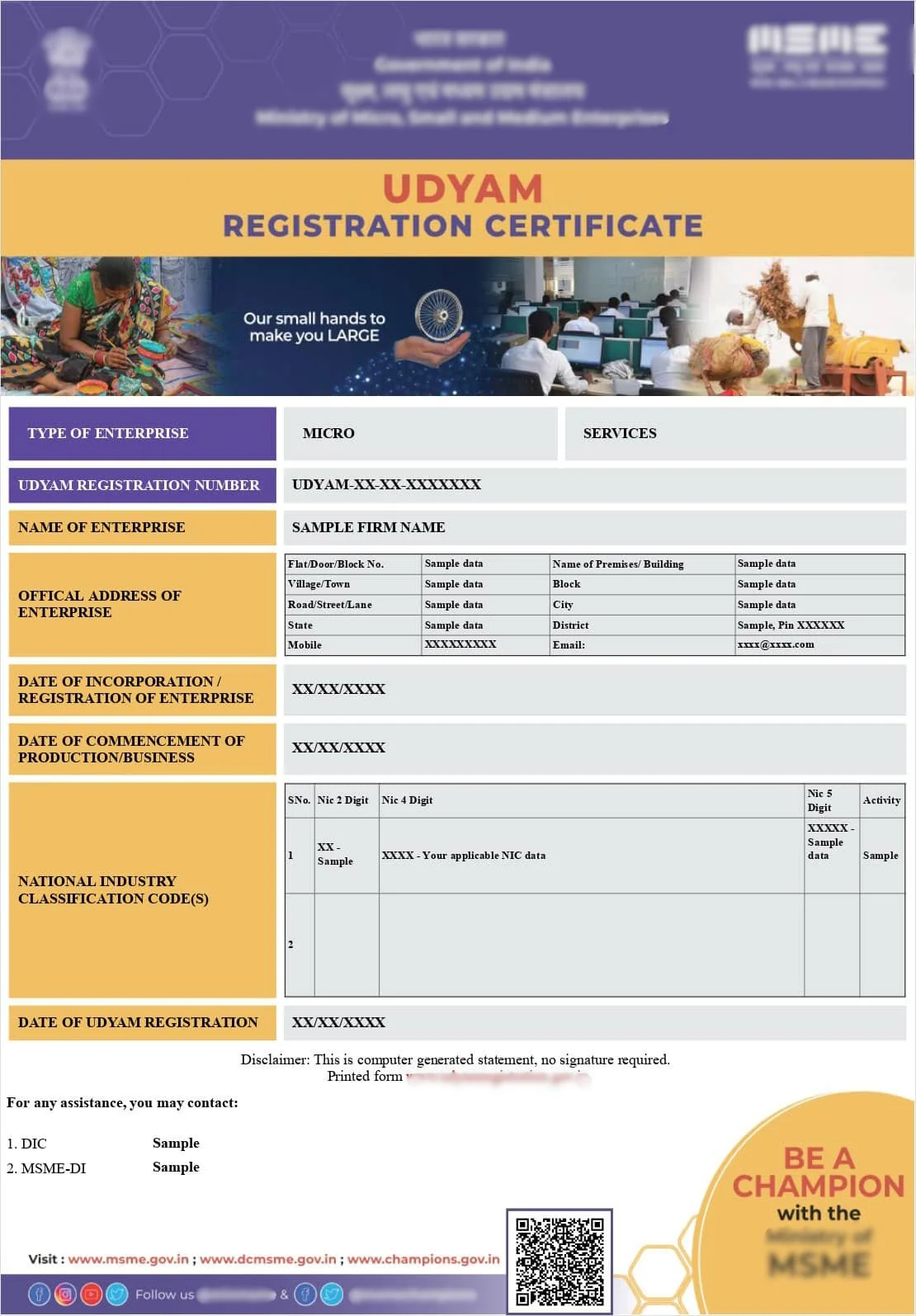
Note: Sample Udyam Adhar Certificate shown for reference purposes only.
Udyam Registration — Register Your Business the Right Way
Udyam Registration is the official process by which micro, small and medium enterprises in India register themselves with the Ministry of MSME using PAN and Aadhaar. It gives businesses a unique Udyam Registration Number and certificate, which is needed to access government schemes, subsidies and priority lending benefits.
Get Your Udyam Registration Done Right — Talk to an Expert Today
Get expert helpQuick Facts
- Processing Time
- Usually 1 to 7 working days, depending on document accuracy
- Documents
- Aadhaar number, PAN, business bank details, business activity details
- Eligibility
- Micro, small and medium manufacturing or service enterprises
- Validity
- Lifetime, no renewal required
- Certificate
- Digital Udyam e-certificate with unique registration number
- Authority
- Ministry of Micro, Small and Medium Enterprises, Government of India
- Who Can Apply
- Proprietorships, partnerships, LLPs, private limited companies, and other business entities meeting MSME criteria
Introduction
If you run a small business in India, chances are you have heard the term Udyam Registration more than once. Maybe a vendor asked for your Udyam certificate. Maybe your bank mentioned it while discussing a business loan. Or maybe you simply want to know if your shop, manufacturing unit or service business qualifies for government MSME benefits. Udyam Registration is the current, official way for businesses to register themselves as a Micro, Small or Medium Enterprise (MSME) with the Government of India. It was introduced to make the earlier registration process simpler and to reduce paperwork. Today, it is one of the most important documents a small business owner can have, right alongside GST registration and a current bank account. In this guide, we will walk you through what Udyam Registration actually means, who should apply, what documents you need, the exact process, common mistakes that cause delays or rejections, and how Udyamadhar can help you get it right the first time.
What is Udyam Registration
Udyam Registration is an online, self declaration based registration system for MSMEs, run by the Ministry of MSME. It replaced the older Udyog Aadhaar Memorandum (UAM) system in July 2020. The word "Udyam" itself means enterprise, and the registration is meant to formally recognise your business as a legitimate micro, small or medium enterprise under Indian law. Unlike older systems that required scanned documents and manual verification, Udyam Registration works differently. It pulls your business information directly from your PAN and Aadhaar linked records, including income tax returns and GST filings where applicable. This means less paperwork for you, and fewer chances of fraudulent registrations, since everything is linked to your verified government IDs. Once your registration is complete, you get a Udyam Registration Number, which is a permanent identification number for your enterprise, along with a Udyam Registration Certificate that you can download and use wherever required.
Why the Government Introduced Udyam Registration
Before Udyam, small businesses registered under the Udyog Aadhaar Memorandum, which itself replaced an even older, more paperwork heavy system. Each time, the government's goal was the same: make it easier for genuine small businesses to get recognised so they can access support meant for them. The shift to Udyam in 2020 came with a few important changes. Investment and turnover limits for classifying businesses as micro, small or medium were revised. The process was made completely paperless and based on self declaration, backed by data already available with the Income Tax Department and GST Network. This reduced misuse and made verification faster on the government's end.
How Udyam is Different from the Old Udyog Aadhaar System
If you registered under Udyog Aadhaar before 2020, you may be wondering whether that old registration is still valid. It is not compulsory to use, but businesses with an older Udyog Aadhaar Memorandum have been encouraged to migrate to Udyam. The two systems used different classification criteria and different registration numbers, so many benefits, schemes and tenders today ask specifically for a Udyam Registration Number rather than the older UAM number. If your business still holds only a Udyog Aadhaar number, we recommend re-registering under Udyam to avoid any issues with banks, tenders or scheme applications going forward.
Who Should Apply for Udyam Registration
Udyam Registration is meant for businesses that fall under the government's definition of micro, small or medium enterprises, based on two factors: how much your business has invested in plant, machinery or equipment, and what your annual turnover is. This applies to a wide range of business types, including: - Manufacturing units of any size within the MSME limits - Service providers, including consultants, agencies and professional service firms - Traders (with certain limitations on scheme eligibility) - Proprietorships, partnerships, LLPs, and private limited companies - Startups that meet the investment and turnover criteria If you are unsure whether your business qualifies, our team at Udyamadhar can quickly assess your investment and turnover figures and tell you exactly where you stand before you apply.
Benefits of Udyam Registration
Many business owners register simply because it is commonly asked for, without realising just how many practical benefits come with it. **Financial benefits:** Udyam registered businesses often get easier access to collateral free loans under schemes like CGTMSE, along with interest rate subsidies on certain loan products from banks and NBFCs that recognise MSME status. **Government scheme benefits:** A large number of central and state government schemes, subsidies, and support programs are only open to businesses with a valid Udyam certificate. This includes technology upgradation subsidies, market development assistance and various sector specific schemes. **Protection against delayed payments:** Under the MSME Development Act, registered enterprises get legal protection if a buyer delays payment beyond the agreed period, along with the right to claim compounded interest on the delayed amount. **Priority in government tenders:** Many government tenders and public sector procurement processes reserve a portion of contracts for MSMEs, or give preference to Udyam registered businesses. **Business credibility:** A Udyam certificate is increasingly seen as a mark of legitimacy by banks, larger companies you may want to work with as a vendor, and even customers.
Eligibility for Udyam Registration
Eligibility depends on your enterprise's classification, which is based on two criteria measured together, investment in plant and machinery or equipment, and annual turnover. Both manufacturing and service enterprises are treated under the same combined criteria today, which was one of the major simplifications introduced with Udyam. Broadly, businesses are classified as micro, small or medium based on where their investment and turnover figures fall within the government's prescribed limits. If you are close to a threshold or unsure which category you fall under, it is worth getting this checked before you register, since misclassification can create problems later when applying for schemes.
Documents Required for Udyam Registration
One of the biggest advantages of Udyam Registration is how little documentation it actually needs upfront, since most verification happens digitally in the background. You will generally need: - Aadhaar number of the proprietor, managing partner, or authorised signatory - PAN of the business or individual, depending on entity type - GST number, where applicable to your business type - Bank account details of the business - Basic business details such as name, address, and type of activity (manufacturing or service) - NIC code relevant to your main business activity No physical documents need to be uploaded in most cases, since the system verifies your details electronically. That said, having your documents organised and accurate before you start saves a lot of back and forth.
Step by Step Udyam Registration Process
**Step 1: Registering with Aadhaar and PAN** The process begins with entering the Aadhaar number of the business owner or authorised signatory, along with an OTP verification. Your PAN details are then validated, and where applicable, your GST details are checked against government records. **Step 2: Filling Business Details** Next, you provide details about your business, including its name, type of organisation, address, bank account information, main business activity, and the NIC code that best describes what your business does. You will also enter your investment and turnover figures. **Step 3: Verification and Submission** Once all details are filled and reviewed, the application is submitted. The system cross checks the information against income tax and GST records. **Step 4: Getting Your Udyam Certificate** After successful verification, you receive your Udyam Registration Number, and your Udyam e-certificate becomes available for download. This certificate does not need to be renewed and remains valid for the lifetime of the business, though you are expected to update turnover and investment figures periodically.
Not sure if you're eligible? Let us check your business details for free before you apply.
Get expert helpTimeline for Udyam Registration
When all details match correctly across your PAN, Aadhaar and GST records, registration can be completed within a day or two. However, in practice, many applications get delayed due to mismatched details, incorrect NIC codes, or errors in investment and turnover figures. In such cases, resolving the issue and completing registration can take anywhere from a few days to a couple of weeks.
Common Mistakes in Udyam Registration
We regularly see business owners run into the same handful of avoidable mistakes: - Entering an NIC code that does not accurately reflect the main business activity - Mismatched details between Aadhaar, PAN and GST records - Incorrect investment or turnover figures, sometimes entered as gross figures instead of net figures as required - Using someone else's Aadhaar or an outdated Aadhaar linked mobile number for OTP verification - Registering under the wrong entity type, for example choosing proprietorship when the business is actually a partnership
Common Reasons for Rejection or Applications Getting Stuck
Applications rarely get outright "rejected" in the traditional sense, but they frequently get stuck in verification loops. This usually happens because of data mismatches between what is entered and what exists in government records, incomplete bank verification, or incorrect classification of business activity. In some cases, businesses that do not actually meet MSME investment and turnover limits also face issues during verification.
How Udyamadhar Helps You
At Udyamadhar, we handle the entire Udyam Registration process for you, from checking your eligibility and correct classification, to preparing accurate details before submission, to resolving any verification issues that come up. We also help businesses that already have a registration but need to update, correct, or migrate from an older Udyog Aadhaar number. We provide professional assistance for registration and compliance services. We are a private consultancy and are not affiliated with any Government department.
Real Business Scenario
Consider a small furniture manufacturing unit in Pune with two workshops and a handful of employees. The owner wanted to apply for a collateral free MSME loan to buy new machinery, but the bank asked for a valid Udyam certificate first. When the owner tried registering on their own, the application got stuck because the NIC code entered did not match the actual nature of the business, and the turnover figure was entered incorrectly. After getting the classification and figures corrected, the registration went through smoothly, and the business was able to proceed with its loan application within days.
Common Questions on Udyam Registration
Business owners usually want to know whether registration is compulsory, how long it takes, whether it needs renewal, and what happens if their business grows beyond the MSME limits after registration. These are addressed in detail in the FAQ section below.
Conclusion
Udyam Registration is one of the simplest yet most valuable steps a small business in India can take. It opens the door to financial support, government schemes, legal protections and better credibility, all through a process that is designed to be quick and paperless when done correctly. The challenge for most business owners is not the concept, it is getting the details right the first time so the application does not get delayed.
CTA
Want your Udyam Registration done correctly, without the back and forth? Reach out to Udyamadhar today and let our team handle it for you. ---
Why trust this guide
- Private consultancy disclaimer
- We provide professional assistance for registration and compliance services. We are a private consultancy and are not affiliated with any Government department. ---
Frequently Asked Questions
Related guides
- MSME Registration— Broader category page this topic sits under
- apply for Udyam Registration online— Direct transactional next step
- download your Udyam Registration Certificate— Natural follow up action
- check your Udyam Registration status— Post application need
- documents required for Udyam Registration— Supports document section
- check your eligibility for Udyam Registration— Supports eligibility section
- migrating from Udyog Aadhaar— Referenced in comparison section
- MSME loan benefits— Referenced in benefits section
- is Udyam Registration free— Referenced in FAQ
Avoid delays and rejections. Let Udyamadhar handle your Udyam Registration end to end.
Get expert helpFrequently Asked Questions for MSME registration in India.
MSME Business Help Services Online, SSI – Small Scale Industries Certificate – Update, Edit, and Download Acknowledgement
Udyam Assistance Process – Fast & Simple
Fill Form & Make Payment
Submit Required Information
Expert Assistance & Verification
Updates Shared via Email
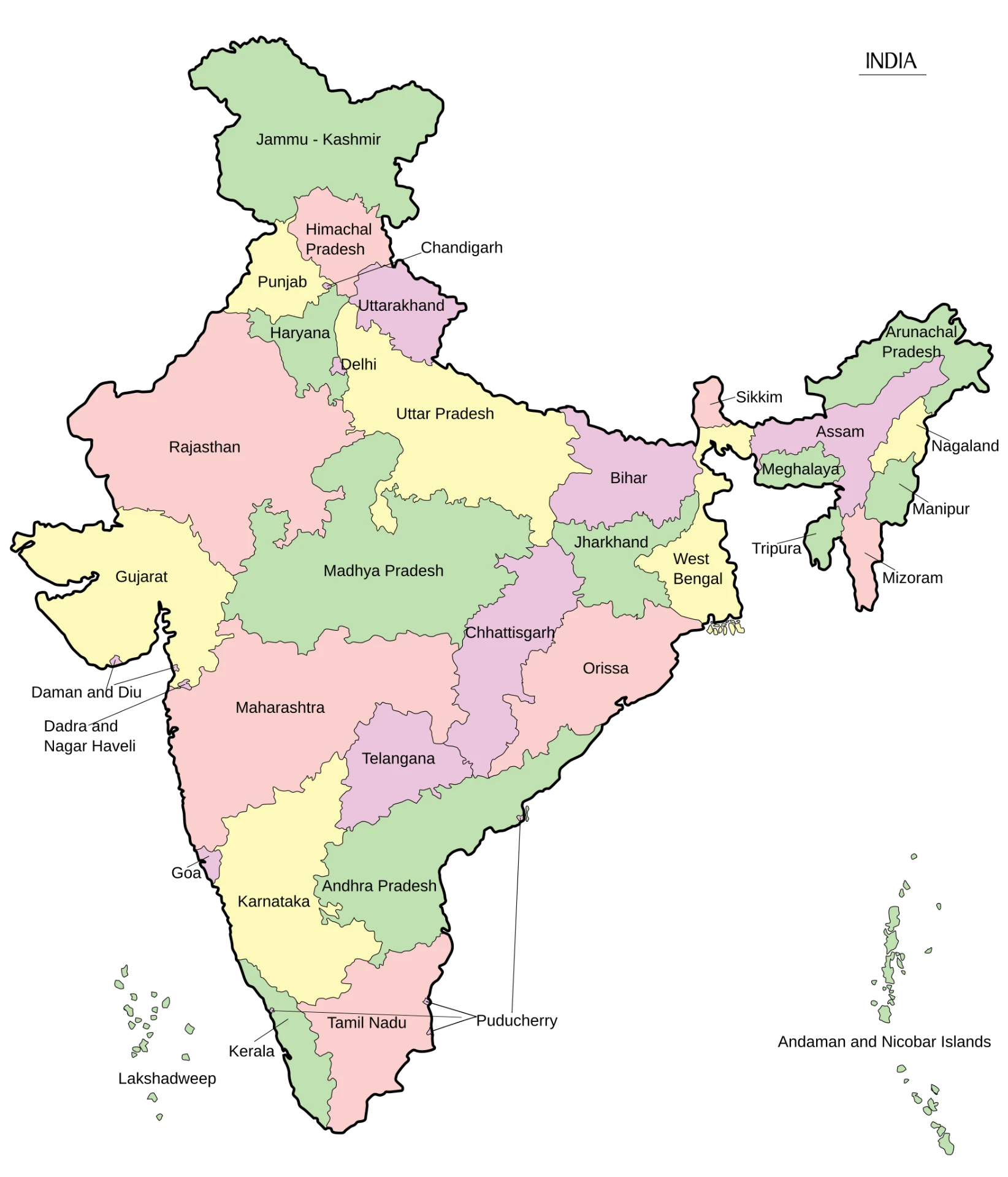
We provide consultancy services across India.
| Country | India |
|---|---|
| Area | 3,287,263 sq. km. |
| States | 28 |
| Population | 1,46,39,00,000 |
| Literacy | 80.9% |